
Efforts to resolve three major religious site disputes in Uttar Pradesh - Gyanvapi, Sri Krishna Janmabhoomi-Shahi Eidgah, and Sambhal Shahi Jama Masjid - through out-of-court settlements have failed, with all parties insisting on judicial adjudication.

The Supreme Court has directed that a separate open space be provided adjacent to the disputed Bhojshala site in Madhya Pradesh's Dhar for offering namaz on Fridays, pending the final resolution of the case. The court emphasised the sensitive nature of the matter and urged both Hindu and Muslim sides to exercise patience.

Both Hindu and Muslim parties involved in the Gyanvapi dispute have rejected the Supreme Court's mediation initiative, stating that the matter should be resolved through judicial adjudication. This decision came during a session at a Varanasi court, where both sides expressed their preference for a court verdict over an out-of-court settlement.

The Supreme Court has agreed to hear a plea from the Muslim side regarding the non-compliance of its directions to provide an alternative site near the disputed Bhojshala complex in Dhar, Madhya Pradesh, for Friday prayers. The Muslim side alleges the proposed site is unsuitable and too far, while the Solicitor General claims another location has been identified.

Members of the Akhil Bharat Hindu Mahasabha were stopped by police while attempting to enter the Taj Mahal with kanwars to perform religious rituals, claiming the monument is a Shiva temple. They were redirected to a different temple to perform their worship.

The Madhya Pradesh High Court referenced the Supreme Court's Ayodhya verdict principles while ruling on the Bhojshala-Kamal Maula mosque complex case, determining the site to be a temple dedicated to Goddess Saraswati.

The Supreme Court has allowed the Muslim community to offer Friday prayers at a dargah adjacent to the disputed Bhojshala complex in Dhar, Madhya Pradesh, between 1 pm and 3 pm. This directive comes after the Muslim side alleged non-compliance with a previous order for an alternative prayer site, and follows a Madhya Pradesh High Court ruling declaring the complex a temple.

The Supreme Court has permitted Muslims to offer Friday prayers at a site adjacent to the Bhojshala-Kamal Maula complex in Dhar, Madhya Pradesh, following a High Court ruling that declared the complex a temple. This decision allowed prayers to resume after a previous ASI order was quashed.
The Supreme Court has agreed to hear appeals challenging the Madhya Pradesh High Court's decision to designate the Bhojshala complex as a Goddess Saraswati temple, a ruling that also quashed Muslim prayer rights at the historic site.

The Supreme Court has deferred the hearing on the Krishna Janmabhoomi-Shahi Idgah mosque dispute in Mathura. The adjournment comes as Hindu parties involved in the case are reportedly engaged in off-the-record talks to determine which lawsuit will serve as the lead case. The court was hearing a plea challenging an Allahabad High Court order that designated one Hindu party as the representative for all Lord Krishna devotees.
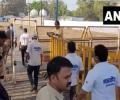
The Archaeological Survey of India (ASI) has informed the Madhya Pradesh High Court that a massive structure dating back to the Parmar kings existed at the Bhojshala temple-Kamal Maula mosque complex, and the current structure was built from the remains of temples.

The Nirmohi Akhara has approached the Supreme Court, seeking a directive to the Centre to reconstitute the Shri Ram Janmabhoomi Theerth Kshetra Trust as a 'public trust' and include structural safeguards for oversight by seers, citing alleged large-scale embezzlement of donations.

The Madhya Pradesh High Court has declared the disputed Bhojshala complex in Dhar to be a temple dedicated to Goddess Saraswati, suggesting the Muslim community seek land elsewhere for a mosque.
Members of the Muslim community in Madhya Pradesh's Dhar district said they would offer their first Friday namaz at home and wear black bands after the court setback in the Bhojshala case.

Bihar Police have announced increased security measures ahead of the Holi festival to prevent disturbances and maintain law and order.

Devotees entered the Bhojshala complex in Dhar district on Saturday to offer prayers after the Indore Bench of the Madhya Pradesh high court declared the disputed Bhojshala-Kamal Maula complex a temple and granted the Hindu side the right to worship at the site.

Delhi Police have arrested a 26-year-old man wanted in connection with a firing incident in Jagatpuri, Delhi, related to an extortion attempt allegedly orchestrated by a Punjab-based gangster.

The prime accused in the murder of a temple priest in Unnao, identified as Issrael, was killed in a police encounter early Monday. An SOG constable was injured during the exchange of fire. Issrael was wanted for the June 9 murder of Sant Ram Miland Das, which had caused tension in the area.
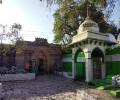
A fresh plea has been filed before the Supreme Court challenging a Madhya Pradesh High Court order, which said that the disputed Bhojshala complex in Dhar district was a temple dedicated to Goddess Saraswati.
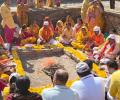
Hundreds of Hindu devotees gathered at the Bhojshala complex in Dhar, Madhya Pradesh, for a 'maha aarti' following a high court ruling declaring the site a temple. Members of the Muslim community protested peacefully by offering namaz at home wearing black bands.

Over 1,500 police personnel have been deployed around the Bhojshala in Dhar, Madhya Pradesh, ahead of the first Friday since the high court declared it a Vagdevi temple.
A Hindu party has filed a caveat in the Supreme Court regarding the Bhojshala complex dispute, seeking a hearing before any orders are passed on appeals against the Madhya Pradesh High Court's decision.
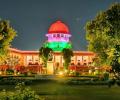
The Supreme Court has agreed to list for final hearing the pleas challenging the validity of certain provisions of the Places of Worship (Special Provisions) Act, 1991.
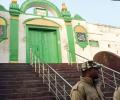
The Uttar Pradesh government has informed the Supreme Court that the disputed "private well" near the Mughal-era Jama Masjid mosque in Sambhal was situated on public land. The state government said the petitioner failed to disclose there was a well within the boundary walls of the mosque known locally as "yagna koop". The committee, in a spot inspection, found that the well was situated outside the mosque boundary wall, the report said. The report said the state was committed to ensuring peace and harmony in the region and any restraint on the use of such public wells by the community at large may not help in achieving that goal.

A clash between two groups at a gurdwara in Moers, Germany, resulted in injuries to four people and prompted a large-scale police response.

The Supreme Court has rejected a petition seeking to prevent the construction of mosques named after Mughal emperor Babur.

Peace prevailed at the disputed 11th-century Bhojshala-Kamal Maula Mosque complex in Madhya Pradesh's Dhar district on Friday as Hindus performed puja to mark Basant Panchami festival while Muslims offered namaaz within the same premises but at a different location.

Over the past week in Bangladesh, two Hindu men were killed in separate incidents while four people, including a priest, sustained injuries after a crude bomb went off inside a temple in the country.

The core issues to be settled -- access to Hormuz, Israel's aggression in Lebanon, the question of Iran's nuclear programme, sanctions relief and compensation -- are thorny enough to require weeks of patient negotiation. The most likely outcome of the opening sessions is that both sides take the measure of each other, establish what is and is not negotiable, and return home without having broken anything. That would count as progress.

Hindus will offer prayers from sunrise to sunset on Basant Panchami while Muslims to offer namaz from 1 pm to 3 pm on Friday.
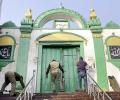
The latest issue of "Organiser", an RSS-linked magazine, has argued that the ongoing dispute over the Shri Harihar Mandir in Sambhal, Uttar Pradesh, is not about religious supremacy but about seeking "civilisational justice" by uncovering historical truth. The editorial, penned by Prafulla Ketkar, editor of "Organiser", contends that the debate should not be limited to a Hindu-Muslim perspective but should encompass a wider discussion on historical truths and social justice. The magazine further criticizes the Congress's handling of caste and religious issues, accusing it of whitewashing historical injustices and promoting a false narrative about Mughal rulers.
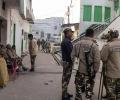
A four-member team from the Archaeological Survey of India (ASI) conducted a survey of the recently-discovered Shri Kartik Mahadev temple, five pilgrimage sites, and 19 wells in Sambhal, Uttar Pradesh, India. The survey followed the discovery of three damaged idols inside a well of the Bhasma Shankar temple, which was reopened after being shut for 46 years. The Shri Kartik Mahadev temple, also known as the Bhasma Shankar temple, was reopened on December 13 after authorities found the covered structure during an anti-encroachment drive. The temple houses an idol of Lord Hanuman and a Shivling and had remained locked since 1978. The district administration has requested carbon dating of the temple, including the well, from the ASI. Meanwhile, the Supreme Court has restrained courts across India from entertaining new lawsuits or passing any orders in pending ones seeking to reclaim religious places, especially mosques and dargahs, until further notice. This action halts proceedings in approximately 18 lawsuits filed by Hindu parties seeking surveys to determine the original religious character of 10 mosques, including the Gyanvapi at Varanasi, the Shahi Idgah Masjid at Mathura, and the Shahi Jama Masjid at Sambhal, where four individuals died in clashes. The Supreme Court will examine the legality, scope, and boundaries of the Places of Worship (Special Provisions) Act, 1991, which prohibits the conversion of places of worship and ensures the preservation of their religious character as it existed on August 15, 1947.
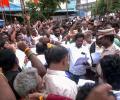
The Deepa Thoon controversy, if not allowed to die a natural death, could take the election focus away from the anti-incumbency impacting the DMK and into the secular space. Stalin would love to have it that way, all over again, after the three past elections, points out N Sathiya Moorthy.

The rulers of the day need to be sensitive and involved in managing the identities of sacred spaces and the ongoing dialogues about the past in diverse societies, suggests Colonel Nikhil Apte (retd).
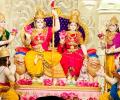
According to Hindu scriptures, Ganga Dussehra marks the day the holy river Ganga descended to Earth from Lord Shiva's locks, moved by King Bhagirath's penance. The day is considered highly auspicious and symbolises virtue, penance, and the collective well-being of humanity.
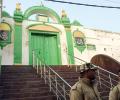
The Committee of Management, Shahi Jama Masjid, moved the high court challenging the suit and the Sambhal court order which directed the survey through an advocate commissioner.
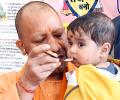
Uttar Pradesh Chief Minister Yogi Adityanath has vowed to reclaim every inch of land taken under the pretext of Waqf, stating that the state government will actively investigate all "occupied" land. He also criticized the Samajwadi Party (SP) and its leaders, alleging that they failed to uphold the principles of socialist leader Dr. Ram Manohar Lohia. Adityanath praised the Maha Kumbh, highlighting its significance as a symbol of India's spiritual heritage and national unity.
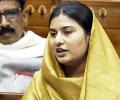
Samajwadi Party leader and Kairana MP Iqra Choudhary has moved the Supreme Court seeking effective implementation of the Places of Worship (Special Provisions) Act, 1991. This move comes amidst several petitions challenging the law's validity, including those filed by the Akhil Bhartiya Sant Samiti and lawyer Ashwini Upadhyay. The Supreme Court, in December 2022, had restrained all courts from examining fresh suits and passing interim orders in pending cases seeking to reclaim religious places. The Act aims to maintain the religious character of places of worship as they existed on August 15, 1947, but the dispute relating to Ram Janmabhoomi-Babri Masjid at Ayodhya was kept out of its purview. The court has listed Choudhary's plea with other pending pleas for February 17.

Members of Hindu right-wing outfits allegedly created ruckus at a mausoleum in Fatehpur district in Uttar Pradesh, demanding permission to offer prayers and claiming a temple had previously existed at the site. The incident has led to heightened security and political reactions.
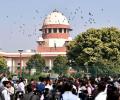
A bench comprising Chief Justice Sanjiv Khanna and Justice Sanjay Kumar also indicated that it may not take up the pending scheduled petitions, heard earlier by a three-judge bench, during the day as it was sitting in a combination of two judges.
